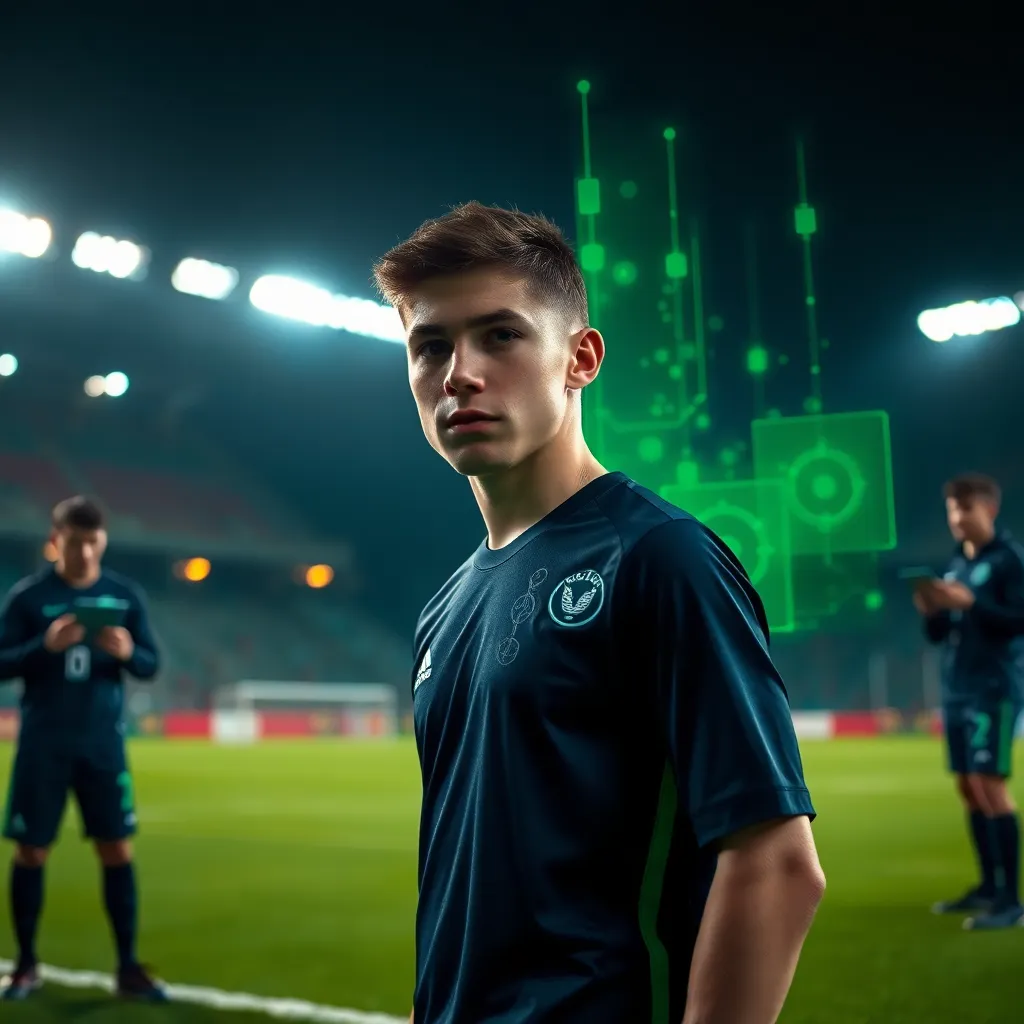
How AI Video Analysis Works When Scouts Review Your Football Footage
 Scout Me Pro
You've filmed your training session, clipped your best moments from Sunday's match, and uploaded your footage. Now what? For many young players, that's where the mystery begins. What actually happens to your video? How does a scout — or an AI system — make sense of 90 minutes of raw football footage and turn it into something useful?
Understanding the technology behind AI video analysis isn't just interesting — it's genuinely useful. When you know what the system is looking for, you can film smarter, showcase your strengths more clearly, and give yourself the best possible chance of getting noticed.
Let's break it down.
The Problem With Traditional Scouting
Before we get into the tech, it's worth understanding what AI video analysis is actually solving. Traditional scouting has a talent discovery problem — and it's a significant one.
Think about this: a scout based in Manchester can only physically attend so many matches per week. They're constrained by geography, budget, and time. That means thousands of talented players in rural areas, smaller leagues, or less prominent academies simply never get in front of the right eyes. It's not that the talent isn't there. It's that the pipeline is broken.
AI video analysis changes the equation. It allows scouts to review far more players, in far more locations, without ever leaving their desk — and then use human judgement where it matters most: on the shortlisted players who genuinely stand out.
Step One: Ingestion and Preparation
When your footage is uploaded to an AI-powered platform, the first thing the system does is prepare the video for analysis. This is sometimes called ingestion, and it involves several behind-the-scenes processes:
- Frame extraction: The video is broken down into individual frames — typically 24 to 60 per second — so the system can analyse discrete moments rather than just the overall flow.
- Quality assessment: The system checks lighting, resolution, and camera stability. This is one reason why filming quality genuinely matters. A shaky, poorly lit clip makes the AI's job significantly harder.
- Scene detection: The system identifies key scenes — open play, set pieces, one-on-one duels, goalmouth moments — so it can tag and categorise footage automatically.
This is why well-filmed footage gives you an immediate advantage. It's not about having a professional camera crew — it's about stable footage, decent lighting, and shooting from an angle where your full movement is visible.
Step Two: Player Detection and Tracking
Once the footage is prepared, the system needs to identify and track you as an individual player. This is where computer vision — the AI discipline that teaches machines to interpret visual information — does its heavy lifting.
Using a combination of techniques, the system identifies player silhouettes and tracks their movement across frames. In well-lit footage with a clear background (like a properly marked pitch), this works with impressive accuracy. In crowded penalty boxes or dimly lit evening games, it becomes more complex.
Modern player tracking can follow several key data points in real time:
- Body position and posture
- Running speed and acceleration
- Distance covered and sprint patterns
- Foot contact points and kicking mechanics
- Head positioning during aerial duels
This is the same kind of technology that elite clubs use in their training sessions — just made accessible to players at every level.
Step Three: Movement and Skill Analysis
Here's where it gets genuinely fascinating — and where it starts to matter most for how you film your highlights.
The AI uses pose estimation to map your body's key joints (shoulders, hips, knees, ankles) and track how they move in relation to each other. This creates a kind of skeletal overlay that captures your biomechanics — the technical quality of how you move.
When you take a first touch, for example, the system isn't just noting that you controlled the ball. It's analysing:
- Your body shape as the ball arrives
- Where your weight is distributed
- How far from your body you take the ball
- How quickly you transition into your next action
This kind of detail is exactly what an experienced scout looks for — but the AI can assess it consistently across every single touch in your footage, without fatigue or bias.
What the AI flags as positive indicators
Different platforms weight different attributes, but broadly speaking, AI analysis tends to flag:
- Consistent technical execution — players who perform skills cleanly, repeatedly, under pressure
- Intelligent movement off the ball — positioning, runs made, space created
- Acceleration and change of direction — not just top speed, but explosiveness and agility
- Decision-making patterns — how quickly you identify and act on opportunities
Step Four: Context and Pattern Recognition
Raw athletic data only tells part of the story. The most sophisticated AI analysis tools go a step further — they try to understand context.
This is the difference between noting that a player ran 11km in a match, and understanding that those 11km were full of purposeful pressing runs, intelligent diagonal movements, and well-timed overlaps. The numbers matter, but the pattern behind them matters more.
Pattern recognition allows the system to identify things like:
- How a player's performance changes in the final 20 minutes of a match (a useful indicator of fitness and mentality)
- Whether a player consistently finds space in high-pressure moments
- How effectively a player positions themselves before receiving a pass
This is where AI starts to mirror the intuition of an experienced scout — identifying not just what a player does, but how they think.
Step Five: The Human Layer
Here's something important that often gets overlooked in conversations about AI scouting: the technology isn't replacing scouts, it's empowering them.
What AI does brilliantly is process enormous amounts of footage quickly, flag standout performers, and surface consistent patterns that a human might miss across hours of video. What it doesn't replace is the experienced scout's eye for character, leadership, how a player responds to adversity, or the feel of watching someone play in person.
The practical output of AI video analysis is typically a player report — a structured breakdown that a scout or coach can review. This might include physical metrics, technical ratings across different actions, and highlighted clips of standout moments. The scout then uses this as a starting point, not a conclusion.
Understanding this should change how you approach creating your highlight footage. You're not just trying to impress an algorithm. You're trying to give a scout — who may be reviewing dozens of AI-generated reports — a clear, compelling picture of who you are as a player.
How to Film Your Footage for AI Analysis
Now that you understand the process, here's how to make it work for you:
- Film from a high, wide angle where possible. Full-body visibility is essential for pose estimation and movement analysis. Tight close-up shots of the ball aren't useful — shots that capture your full movement are.
- Prioritise good lighting. Evening games under floodlights can work, but daylight footage is significantly easier for AI systems to process accurately. Where you have a choice, film in good light.
- Include match footage, not just training drills. AI analysis — and scouts — want to see how you perform under competitive pressure. Training clips have their place, but match footage is what carries real weight.
- Don't just include the highlights. It might feel counterintuitive, but some platforms benefit from longer clips that show your positioning, movement off the ball, and decision-making — not just your best moments.
- Keep your clips clean and well-trimmed. Long stretches of irrelevant footage waste the system's processing time and the scout's attention. Make every clip count.
The Bigger Picture
AI video analysis represents one of the most meaningful shifts in football talent discovery in a generation. For the first time, a technically gifted player in a small town can have their ability assessed with the same rigour as a player at an established academy. The barriers of geography and connections are starting to come down.
That doesn't mean the technology is perfect — it's still evolving, and the human element remains irreplaceable. But it does mean that your talent has a better chance of being seen than ever before.
Platforms like Scout Me Pro are built around this idea — using AI-powered video analysis to help young players showcase their ability and connect with scouts who are genuinely looking for talent like theirs. The technology is here. The scouts are watching. The question is whether your footage is ready to show them what you're capable of.
If you're serious about getting noticed, join the Scout Me Pro waitlist today and be among the first to get your footage in front of the scouts who matter.